Carl Sagan once said, “We live in a society exquisitely dependent on science and technology, in which hardly anyone knows anything about science and technology.”
Our goal here in St Hilda’s science is to equip our pupils with the knowledge to prove this quote to be a falsehood.
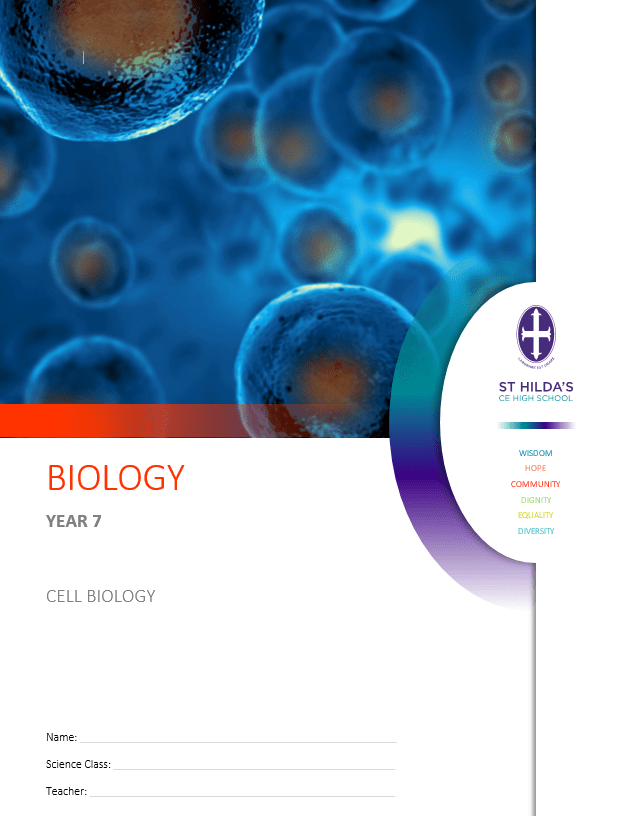
> Cells
- After this unit, you will know: the features and functions of plants and animal cells.
- You will need to remember: how to explain the process of diffusion.
- You will be able to do the following: use a microscope to view objects too small for the human eye to see.





> The Particulate Nature of Matter
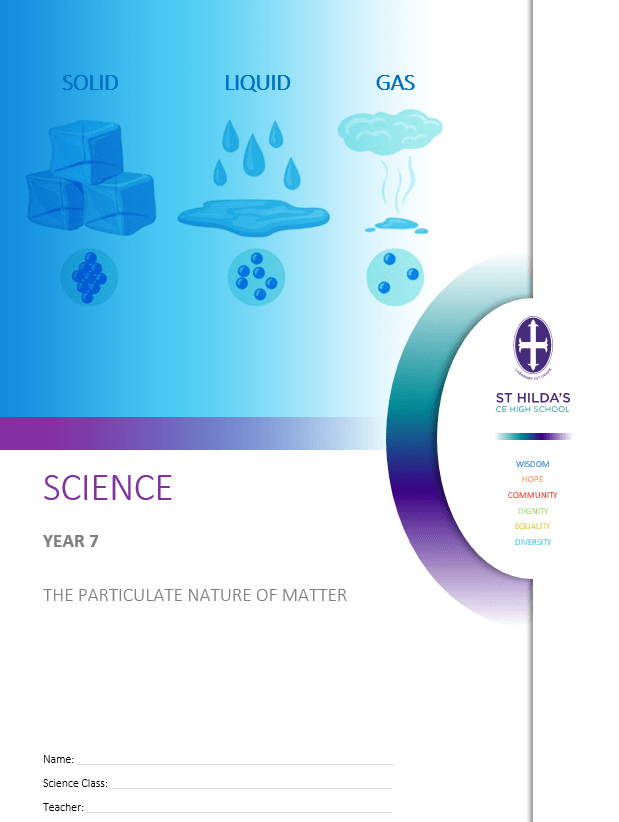
- After this unit, you will know: the properties of solids, liquids and gases.
- You will need to remember: the definition of substances such as elements, mixtures or compounds, and word equations to describe their reactions.
- You will be able to do the following: conduct a practical safely, whilst incorporating the terminology of variables into your explanations.
> Forces 1
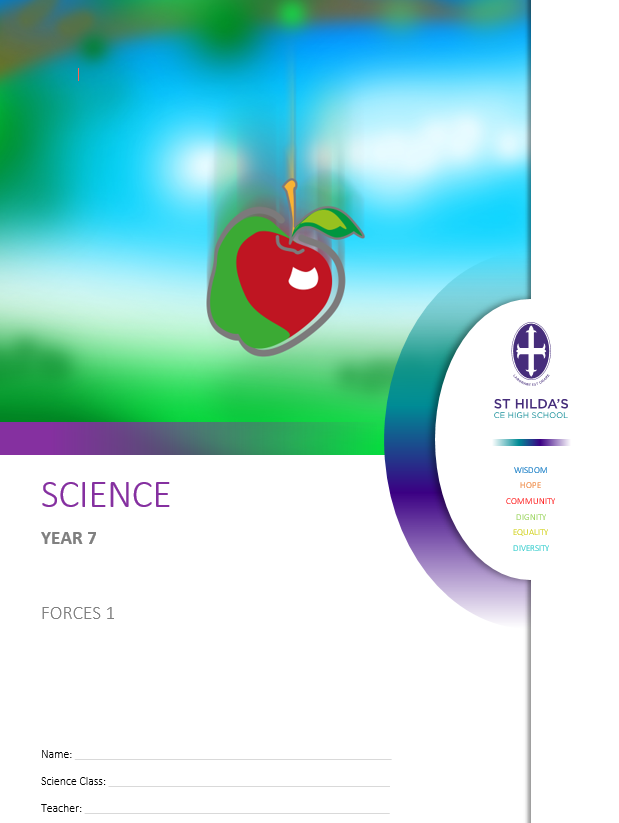
- After this unit you will know: how to describe and predict the affect that forces have upon objects.
- You will need to remember: how to explain the concept of balanced and resultant forces.
- You will be able to do the following: complete an experiment investigating the relationship between the force applied to a spring and its extension.
> Organs and Organ Systems
- After this unit, you will know: the hierarchy of cells, tissues, organs and organ systems.
- You will need to remember: how to explain how the different organ systems within plants and animals work to keep them alive.
- You will be able to do the following: complete a dissection to investigate the properties of joints.
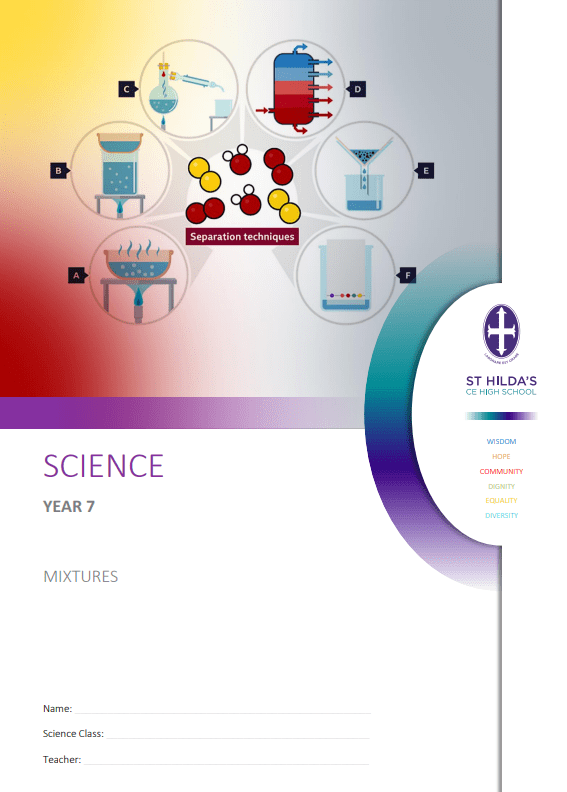
> Mixtures
- After this unit you will know: the different separation techniques used for mixtures.
- You will need to remember: which separation technique to use in different situations.
- You will be able to do the following: complete the separation techniques such as filtration, evaporation, distillation and chromatography.
> Sound and light
- After this unit you will know: the similarities and differences between light and sound waves.
- You will need to remember: to be able to describe how waves behave when meeting a barrier, whether it be reflection, refraction, absorption or transmission.
- You will be able to do the following: complete experiments looking at the relationships between angles of incidence and angles of reflection and refraction.
> Chemical Reactions A
- After this unit you will know: how to relate atoms and elements to the process of a chemical reaction.
- You will need to remember: how to represent chemical reactions using formulae.
- You will be able to do the following: to conduct chemical reactions, such as combustion, oxidation and displacement, in a safe manner.
> Heating and Cooling
- After this unit you will know: how to describe the transfer of heat energy through objects.
- You will need to remember: the impact of temperature difference on the rate of heat transfer.
- You will be able to do the following: complete a practical investigating how different insulation affects the rate of heat loss.
> Earth and Space 1

- After this unit you will know: how to describe our place within the universe, and more specifically details of our Solar System.
- You will need to remember: our definitions of days and years and how to relate them to the movement of our Earth.
- You will be able to do the following: to use the Weight = Mass x Gravity equation successfully.
Assessments
For your mid-year assessment, you will need to know:
- Cells
- The Particulate Nature of Matter
- Forces 1

For your end of year assessment, you will need to know:
- Cells
- The Particulate Nature of Matter
- Forces 1
- Organs and Organ Systems
- Mixtures
- Sound and Light
 The Home of our curriculum